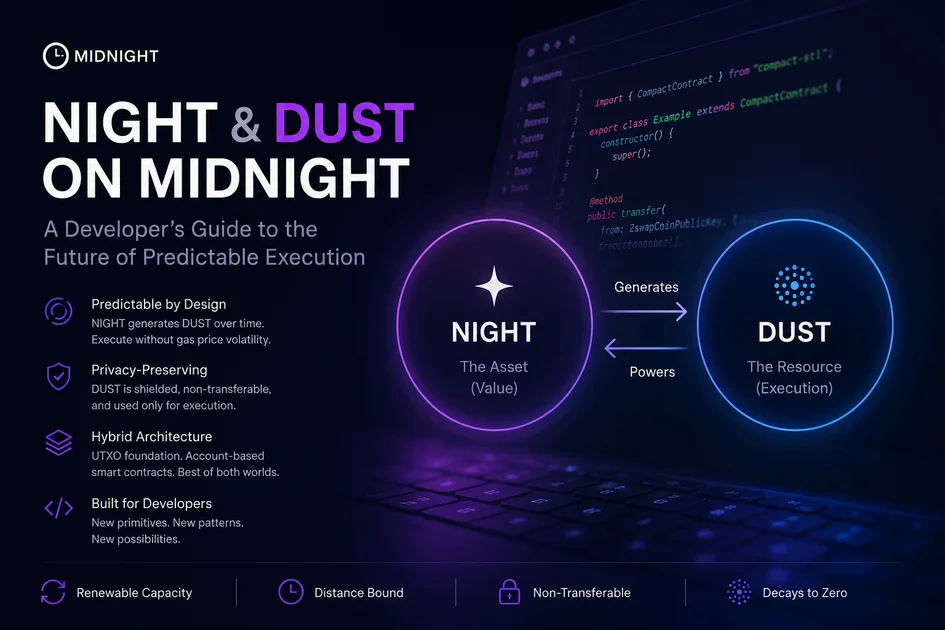
Most blockchain developers are familiar with paying transaction fees directly in a network token, but Midnight takes a different approach. Through its unique NIGHT and DUST architecture, the network separates value storage from transaction execution, creating a more predictable and developer-friendly experience. This article explores how NIGHT generates DUST, why DUST is not a token, and how this model helps developers build privacy-preserving applications with greater cost predictability, better user experience, and new possibilities for application design.
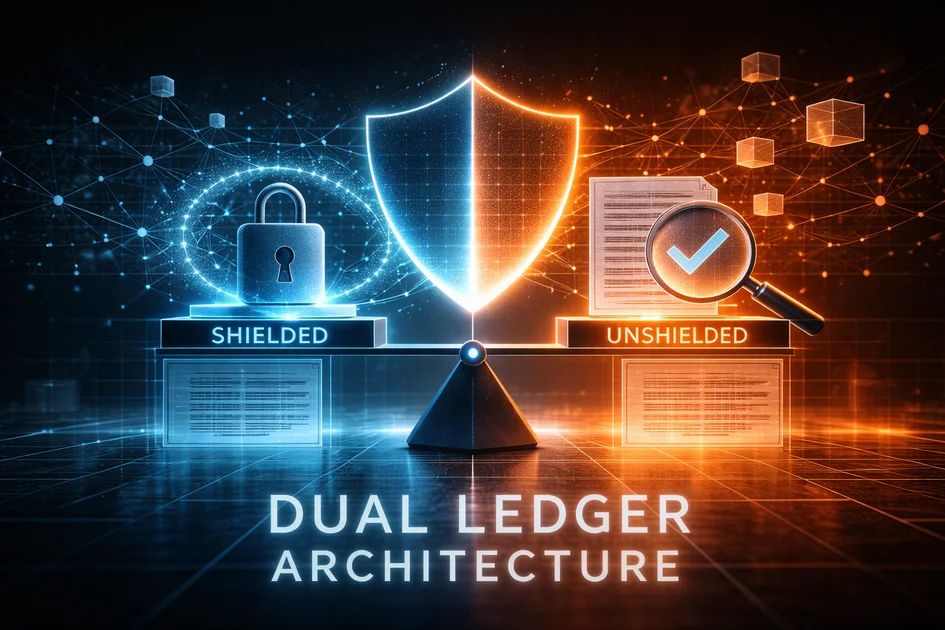
Midnight introduces a new model for blockchain privacy through its dual-ledger architecture, combining shielded and unshielded systems to enable selective disclosure. Instead of forcing complete transparency or full anonymity, the network allows applications to decide what information remains private and what can be publicly verified. By integrating cryptographic proofs with flexible token structures, Midnight Network creates an infrastructure where privacy becomes programmable, opening the door to secure, compliant, and scalable decentralized applications.
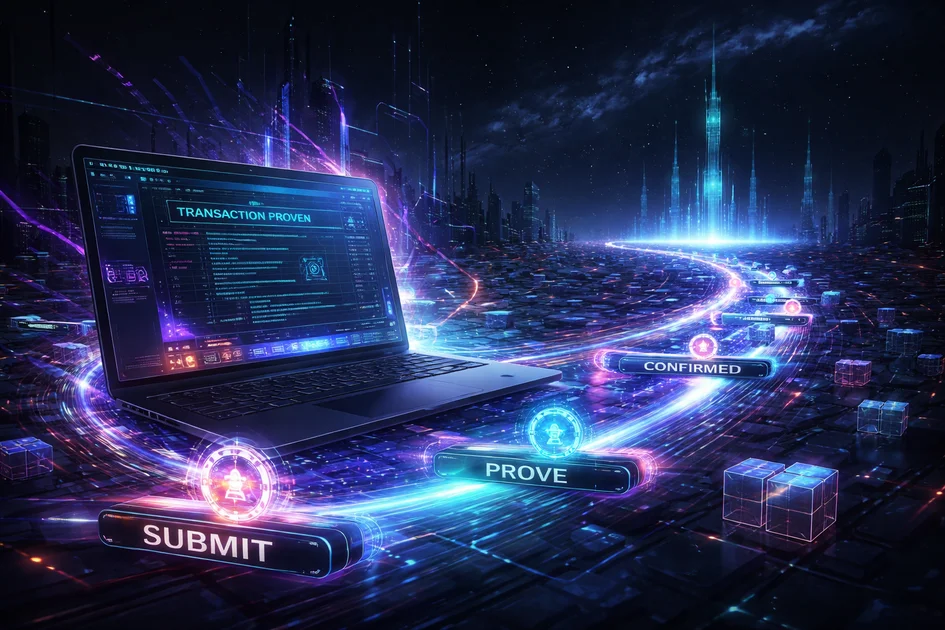
Every time you submit a transaction on Midnight, you’re not just sending data to the network, you’re proving, locally, that your computation is correct before it’s ever accepted. That 20–60 second delay isn’t latency; it’s the cost of generating a zero-knowledge proof that preserves your privacy while guaranteeing validity. From local circuit execution to proof generation and on-chain verification, this hidden lifecycle redefines how blockchain transactions work, shifting trust away from the network and into cryptographic certainty.
Zero-knowledge proofs let blockchains verify transactions without revealing sensitive data. By combining privacy, succinct verification, and Proof-of-Stake security, ZK-enabled networks increase throughput while preserving user sovereignty, making zero-knowledge a foundational layer for next-generation blockchain infrastructure.